Online Dyslexia Test for Children: Clear Steps, Trusted Insights, and Next Moves
- 2 January 2026
Understanding Dyslexia and Why Early Screening Matters
Dyslexia influences how a child processes language, decodes words, and builds fluent reading, yet timely support can dramatically improve confidence and academic progress. Many caregivers weigh whether a free online dyslexia test children pathway can offer meaningful first insights while they wait for school evaluations. A careful, compassionate approach helps families separate myths from evidence, and it sets the stage for targeted intervention. When adults understand the difference between screening and diagnosis, they can make decisions that are both efficient and ethically grounded.
Screening and diagnosis serve different purposes, and mixing them up can create confusion. Clinicians still emphasize that a comprehensive battery remains the gold standard when considering a dyslexia test children route for formal identification. At the same time, accessible screeners can highlight risk patterns that warrant further assessment, allowing parents and teachers to respond quickly. The goal is not to label a child prematurely, but to unlock the right strategies so reading becomes less frustrating and more joyful.
- Early support can reduce anxiety around reading tasks and homework.
- Clear results guide classroom accommodations and home practice.
- Progress monitoring shows whether instruction is working.
- Family-school collaboration creates consistency and momentum.
How Online Screeners Work and What to Expect
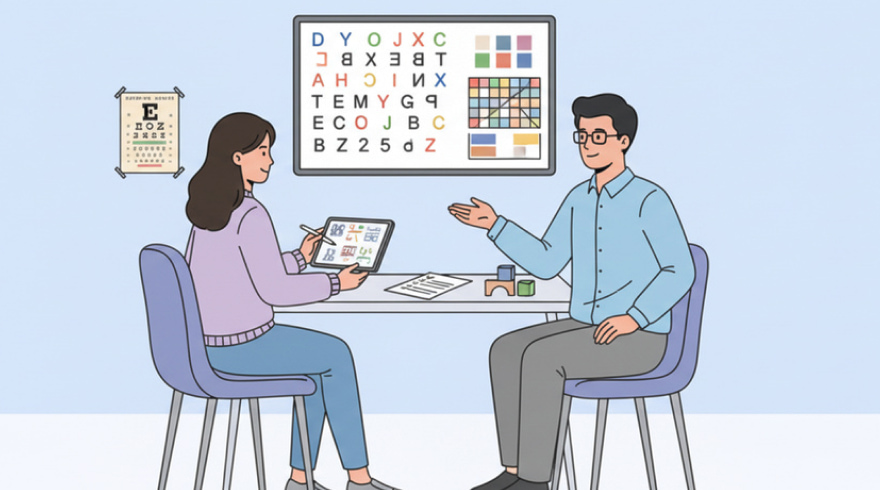
Digital tools translate research-backed tasks into short, child-friendly activities that can be completed on a laptop or tablet. In many families, a quick questionnaire and phoneme tasks are used to test dyslexia children risk markers before a full evaluation. Typical modules probe phonological awareness, rapid naming, letter-sound knowledge, working memory, and decoding. Results are usually delivered as risk levels or percentile bands, often paired with tips for immediate practice.
Reliable platforms explain their methodology, sample size, and the intended use of their scores. Behind the scenes, item banks, timers, and scoring rubrics mirror practices common in dyslexia testing children across clinics and schools. Parents should review privacy policies, age ranges, and accessibility features to ensure the tool fits their child. If a screener suggests elevated risk, the next step is to consult the school or a licensed clinician for a fuller picture.
- Plan for a quiet space and a relaxed pace.
- Read instructions aloud if the tool allows caregiver support.
- Pause and resume if your child becomes fatigued.
- Save or print the summary report for future discussions.
Benefits and Limitations of Free Tools
Free, browser-based screeners reduce barriers for families who need quick guidance and actionable next steps. Interactive games that measure symbol-sound mapping and memory are appealing, yet resources aimed at testing dyslexia children should be transparent about limits and data privacy. Screening results are not diagnoses; they are directional signals that can motivate timely support. Clarity about what a tool can and cannot do prevents false reassurance and unnecessary worry.
The comparison below summarizes how common pathways differ so you can choose thoughtfully.
| Pathway | Purpose | Time | Outcome | Who Uses It |
|---|---|---|---|---|
| Online Screener | Identify risk indicators | 10–20 minutes | Risk level and tips | Families and teachers |
| School-Based Assessment | Guide instruction and services | 1–2 hours | Skill profile and supports | Educators and specialists |
| Clinical Evaluation | Diagnose and rule out comorbidities | Multiple sessions | Diagnosis and treatment plan | Licensed clinicians |
| Progress Monitoring | Track growth over time | 5–15 minutes | Trend data and adjustments | Teachers and families |
Cost, accuracy, and scope vary widely across the market, and clarity about purpose is essential. When you compare options, confirm that the tool positions itself as a dyslexia screening test children resource rather than claiming to diagnose. Look for age-appropriate tasks, plain-language reports, and guidance that connects directly to instruction. With the right expectations, free screeners can be a smart first checkpoint that informs your next steps.
- Pros: accessible, quick, practical recommendations, low stress for kids.
- Cons: not diagnostic, variable quality, limited depth, potential data concerns.
- Best use: early flagging, progress snapshots, and conversation starters.
Preparing Your Child and Interpreting Results
Mindset matters, and a calm setup helps children show what they know without pressure. If you are just starting, you might try a free dyslexia test children pathway offered by libraries or literacy nonprofits to gather baseline insights. Frame the experience as a set of puzzles, not a “test,” and offer short breaks. Afterward, review patterns rather than obsessing over a single score, and note specific strengths that can power instruction.
Next, consider how to translate insights into targeted practice and school collaboration. During long waitlists, some universities host pilot portals that resemble free dyslexia testing children initiatives while they collect normative data. Regardless of the tool, share results with teachers, ask about small-group reading support, and track progress every few weeks. If risks persist, request a formal evaluation or consult a specialist to build a comprehensive plan.
- Use brief, daily practice focused on phonemic awareness and decoding.
- Keep a simple reading log to observe gains and challenges.
- Pair print with audio to support comprehension while skills grow.
- Celebrate effort to nurture resilience and motivation.
Practical Tips for Parents and Educators
Consistency across home and school accelerates growth and reduces frustration. Community centers and school districts sometimes link to a free dyslexia screening test children portal that aligns with local curriculum benchmarks. Educators can combine these early signals with classroom data to plan explicit, structured literacy lessons. Parents can reinforce instruction by reading aloud, playing sound games, and building routines that make practice feel manageable.
Access and equity also shape the path forward, particularly in rural or underserved areas. For families far from services, an online dyslexia test children route can supply instant feedback and reading practice suggestions. Schools can host screening days, provide training on evidence-based reading, and share curated resource lists. With shared language and clear roles, everyone can move from uncertainty to action.
- Set a realistic practice schedule and use short, focused sessions.
- Choose decodable texts matched to current skill levels.
- Monitor progress frequently and adjust instruction accordingly.
- Stay transparent with children so they feel supported, not judged.
Faq: Quick Answers for Busy Families
Can an online screener diagnose dyslexia?
Screeners are designed to flag risk, not to provide a medical or educational diagnosis. Used appropriately, a dyslexia test online children screener can highlight risk patterns, but it cannot confirm a clinical diagnosis. If results suggest elevated risk, consult your school team or a licensed clinician who can administer a full assessment and interpret findings in context.
What age is appropriate for first screening?
Many children can be screened as early as kindergarten, particularly for phonological awareness and letter-sound knowledge. Early flagging helps schools implement targeted instruction sooner, which can prevent widening skill gaps. Families seeking convenience sometimes explore a home dyslexia test children solution as a starting point before speaking with school teams. Ultimately, the decision should align with developmental readiness and professional guidance.
How should I prepare my child for a screen?
Keep it low-stress: choose a quiet space, explain that it’s a series of puzzles, and offer water or brief breaks. Make sure your device is charged and your internet connection is stable. After the session, discuss what felt easy or hard, and praise effort rather than speed. Save the report to share with teachers and to guide future practice.
What do I do if the results show elevated risk?
Share the summary with your child’s teacher and request a meeting to plan targeted support. Ask about structured literacy instruction, small-group interventions, and progress monitoring. If concerns persist, consider a comprehensive evaluation through your school or a clinician. Document changes, keep a simple practice log, and revisit goals every few weeks to ensure growth.
Will a screener help if my child is already receiving support?
Yes, brief screeners can complement progress monitoring by offering another snapshot of skills. They’re especially useful when adjusting instruction or evaluating new strategies. Track results over time to see trends rather than focusing on a single data point. Use insights to fine-tune practice at home and to inform classroom accommodations that sustain progress.