Dyslexia Screening: A Complete Guide for Families, Educators, and Clinicians
- 1 January 2026
What It Is and Why Early Identification Matters
Reading differences often hide behind average grades or strong verbal skills, making early identification challenging. In educational psychology, dyslexia screening functions as a first-pass triage to flag potential reading risks while keeping the process swift. Rather than diagnosing a condition, the process surfaces probability signals that a learner could benefit from targeted instruction and monitoring.
Contrary to popular belief, literacy challenges occur across intelligence levels and socioeconomic backgrounds. For multilingual learners, educators sometimes adapt protocols for screening dyslexia with culturally responsive tasks to avoid bias. When schools normalize routine checks for every student, data becomes a powerful equity lever rather than a gatekeeper.
Parents often describe a hunch, tricky letter-sound mapping, persistent guessing, or fatigue during read-alouds that precedes formal evaluation. Educators, in turn, rely on brief measures grounded in phonological awareness, decoding, rapid naming, and working memory. Together, these indicators paint a mosaic of strengths and needs, offering a practical roadmap to support growth before gaps widen.
- It is quick, standardized, and focused on risk, not labels.
- It helps schools target instruction where it makes the biggest difference.
- It encourages constructive collaboration among caregivers and teachers.
Early Signs, Red Flags, and When to Act
Subtle signs can emerge in preschool: difficulty clapping syllables, trouble recalling nursery rhymes, or confusion with similar-sounding words. Development varies widely, so any single behavior should not be overinterpreted. When multiple indicators cluster and persist across settings, the case for timely follow-up becomes stronger.
Kindergarten and first-grade bring sharper focus as letter-sound correspondence, blending, and segmenting come into play. When caregivers worry about kindergarteners, a dyslexia early screening test can highlight phonological processing gaps long before formal diagnosis. Reliable screeners illuminate where instruction should intensify, whether through phoneme-level practice or explicit decoding routines.
Communication among adults matters as much as technical accuracy. Pediatric practices often coordinate with schools so that a dyslexia screening test children initiative aligns with classroom observations and progress monitoring. Clear follow-through, brief intervention cycles, data review, and adjustments, prevents students from slipping into frustration or avoidance.
- Watch for sustained difficulty with rhyme, sequencing, or letter names and sounds.
- Notice family history, late speech milestones, or inconsistent direction-following.
- Document patterns over time rather than isolated “off days.”
How the Process Works: Measures, Timelines, and Interpreting Results
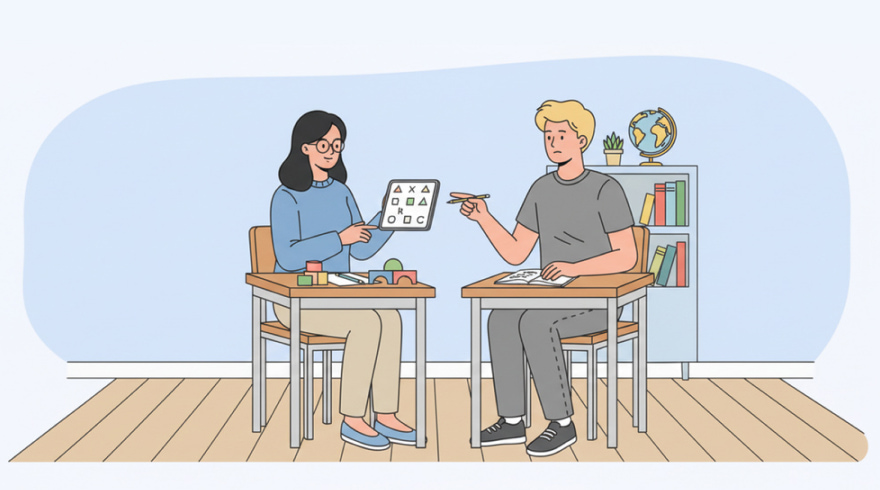
Most schools use short, reliable measures that take only minutes to administer. Screeners typically probe phonemic awareness, grapheme knowledge, nonword decoding, rapid automatized naming, and spelling approximations. School psychologists evaluate phonemic awareness using dyslexia screening tools that balance speed with validity.
Interpreting results involves more than a score cutoff. Teams examine confidence intervals, growth trajectories, and classroom artifacts to avoid one-size-fits-all conclusions. For community clinics, a screening tool dyslexia option with multilingual norms reduces false positives. Periodic re-screening ensures that instruction and development are captured over time rather than frozen in a single snapshot.
To make the landscape easier to grasp, here is a concise comparison of common screener types used in early literacy support.
| Measure Type | Primary Skill | Typical Age/Grade | Time | Use Case |
|---|---|---|---|---|
| Phoneme Awareness Tasks | Blending/Segmenting | Pre-K to Grade 2 | 3–7 minutes | Early risk flag and instruction targeting |
| Letter-Sound Fluency | Grapheme-Phoneme Mapping | K to Grade 2 | 1–5 minutes | Checks mapping accuracy and automaticity |
| Decoding (Real/Nonword) | Orthographic-Decoding | Grades 1–4 | 4–10 minutes | Identifies decoding and pattern generalization issues |
| Rapid Naming | Processing Speed | K to Grade 5 | 2–4 minutes | Surfaces fluency bottlenecks influencing reading rate |
Screeners work best within a Multi-Tiered System of Supports, where universal checks inform Tier 1 instruction and pinpoint who may benefit from brief, targeted Tier 2 sessions. Progress data then guides whether to maintain, intensify, or fade supports, keeping the student at the center of every decision.
Core Benefits: Instructional Precision, Confidence, and Long-term Outcomes
When risk is spotted early, teachers can deliver explicit, cumulative lessons that build decoding step by step. Funders often request data from a dyslexia screening test to justify early intervention slots. Families, meanwhile, gain clarity on how small daily practices, sound play, decodable text routines, and handwriting fluency, compound into measurable growth.
Instructional precision is the standout benefit. Teams lean on a dyslexia screening tool to monitor response to instruction during the first semester. As skills take root, students experience more ease and less cognitive load, freeing mental resources for comprehension, vocabulary, and background knowledge.
Beyond academics, early support meaningfully affects self-worth. Children who see their progress charted and celebrated show greater stamina and willingness to engage with text. Over months, these wins translate into participation across subjects, from science notebooks to history summaries, reshaping a learner’s identity as capable and resourceful.
- Targeted instruction prevents guessing habits and fossilized errors.
- Data-informed tweaks reduce trial-and-error and save instructional time.
- Confidence rises as decoding and fluency improve in parallel.
Choosing a Provider, Getting Ready, and Understanding Next Steps
Families often begin by asking the school about universal screening schedules and available supports. Busy families sometimes begin with online dyslexia screening to gauge whether an in-person assessment is warranted. Whether school-based or clinic-based, clear communication about goals and timelines will help everyone stay aligned.
Before an appointment, collect work samples, notes about homework struggles, and teacher feedback. Community libraries occasionally host nights offering free dyslexia screening staffed by trained volunteers. After results arrive, the next step typically includes a brief cycle of focused instruction, followed by progress checks to see what moves the needle.
Consider asking providers about cultural and linguistic responsiveness, re-screening intervals, and how results will translate into actionable lesson plans. A good partner will explain trade-offs, set realistic expectations, and share resources for reinforcing skills at home with short, engaging activities.
- Clarify what will be measured and how long it will take.
- Request guidance on home practices that complement school instruction.
- Schedule a follow-up to review progress and adjust supports.
Faq: Common Questions About Reading Risk Screeners
How is a screener different from a diagnostic evaluation?
A screener estimates risk quickly, while a comprehensive evaluation determines the presence of a specific learning disability using multiple data sources. Educators use the quick check to route students to the right support, and clinicians use the full evaluation to provide a formal determination and in-depth recommendations.
Can parents start with a digital checker at home?
Some families appreciate a quick digital experience before contacting the school for next steps. In that case, a free online dyslexia screening test can serve as a preliminary snapshot, but it should be followed by school-based measures to ensure accuracy and alignment with instruction.
What happens if results indicate elevated risk?
The typical path includes a short cycle of explicit, high-frequency practice in phonemic awareness and decoding, with progress reviewed after several weeks. If the student responds well, support continues or fades; if not, the team may intensify instruction or consider a more comprehensive evaluation.
Is there a no-cost option for families on tight budgets?
Many communities partner with literacy nonprofits to host screening nights and provide guidance on next steps. For remote access, some platforms present a dyslexia screening test online free that families use as a starting point before seeking school-based follow-up.
How should I prepare my child for the appointment?
Keep it low-stress: explain that short word and sound games will help adults understand how to make reading easier. Bring recent schoolwork, note patterns you have observed, and ask the provider to translate results into practical strategies you can use during nightly reading.