
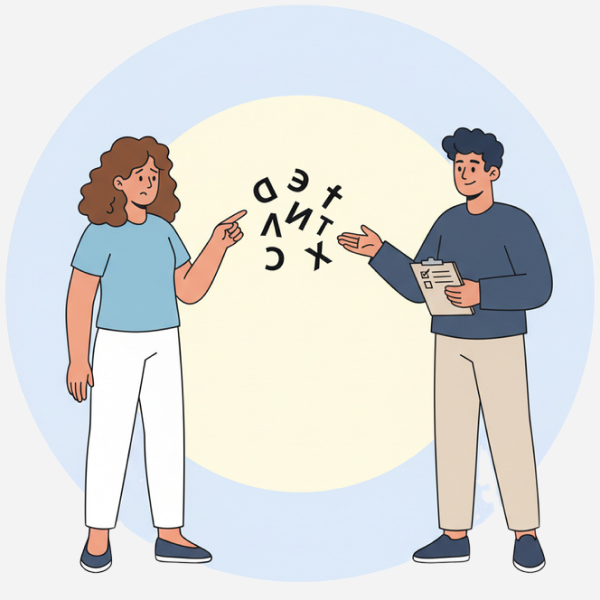
How Assessments Reveal Reading Challenges
Families and educators often notice uneven progress in reading long before a formal label is considered, and they want clarity without stigma. When a learner struggles with rapid word recognition, accurate decoding, and effortless comprehension, professionals look for consistent patterns rather than one-off mistakes. Across clinics and schools, a variety of instruments work together, and a dyslexia test often anchors the initial conversation, synthesizing patterns in decoding and fluency for a precise portrait of strengths and challenges. The aim is not simply to measure a score; the goal is to reveal how a student processes print so interventions can be targeted and humane.

Context also matters because motivation, language background, and classroom instruction shape performance, sometimes masking core reading needs. In multidisciplinary settings, psychologists and literacy specialists collaborate, and dyslexia testing becomes one component among cognitive, language, and achievement measures that triangulate the big picture. Careful interpretation helps guard against overgeneralization, ensuring that what looks like a reading issue is not primarily the result of attention, vision, or inconsistent teaching history.
Screening tools can help triage who needs deeper analysis and who benefits from routine monitoring over time. In early grades, a brief dyslexia screener may flag risks through phonemic awareness, rapid naming, and letter–sound mapping, prompting timely support before habits harden. For adolescents and adults, more comprehensive batteries reveal compensatory strategies that might hide decoding difficulties while still limiting speed and stamina during demanding coursework or work tasks.

- 1Children who guess from pictures or initial letters may be relying on context instead of sound–symbol knowledge, especially when texts become more complex. In many districts, families often choose to get tested dyslexia via school-based teams or community clinics to secure targeted instruction.
- 2Adults who dodged reading tasks in school sometimes excelled elsewhere while quietly building workarounds like audiobooks and memorized scripts. When persistent doubt lingers, the internal question of am I dyslexic can be a healthy nudge toward clarity and practical solutions that boost daily efficiency.
- 3For younger learners, developmentally appropriate measures respect attention spans and include play-like tasks with sound manipulation and letter naming. In that context, specialists tailor a dyslexia test kids pathway that reduces anxiety and yields actionable data for instruction at home and in class.
How Professionals Conduct Literacy Profiling
Qualified clinicians integrate cognitive data, phonological processing measures, word reading accuracy, nonsense word decoding, timed fluency, and comprehension. Interviews and history forms add nuance, clarifying exposure to instruction and family patterns that might inform planning. When adults seek clarity, evaluators select instruments with norms for mature readers, and a structured dyslexia test adults protocol examines both accuracy and efficiency to illuminate hidden bottlenecks that slow professional growth.
| Component | What It Measures | Who Benefits Most |
|---|---|---|
| Phonological Processing | Awareness of sounds, blending, segmenting, rapid naming | Early readers who need foundational sound–symbol support |
| Decoding and Encoding | Real and nonsense word reading, spelling patterns, orthographic mapping | Students showing inconsistent accuracy or guesswork in print |
| Fluency and Automaticity | Rate, accuracy, and prosody under time constraints | Learners with adequate accuracy but limited speed and stamina |
| Language and Comprehension | Vocabulary, syntax, working memory, listening vs. reading understanding | Readers whose decoding differs from comprehension profiles |
| History and Context | Instructional exposure, attendance, health, multilingual background | All ages, to avoid misattribution and refine intervention |
After data collection, practitioners synthesize findings in clear language that demystifies next steps for families and educators. Actionable recommendations include targeted instruction frequency, home practice, assistive technologies, and progress-monitoring schedules aligned to goals. For schools that must triage resources, universal checkpoints can be helpful, and well-designed dyslexia screening cycles allow earlier support while formal evaluations are scheduled without delaying instruction.
Benefits and Early Indicators
Early recognition spares learners the exhaustion of guessing, the embarrassment of reading aloud, and the lost hours spent memorizing irregular words without a reliable system. Research consistently shows that timely support changes trajectories, particularly when instruction emphasizes phonological processing, orthographic mapping, and explicit practice. Because literacy sits at the heart of every subject, a targeted plan built on a thorough dyslexia assessment can prevent cascading effects in writing, vocabulary development, and content understanding across the curriculum.

Signals to watch include difficulty segmenting and blending sounds, slow retrieval of letter names, persistent spelling instability, and avoidance of sustained reading. Teachers and caregivers can capture observations with structured notes, progress graphs, and classroom work samples. To transform impressions into action, a curated dyslexia checklist helps organize observations across phonology, fluency, accuracy, and memory, fostering productive conversations with specialists who can guide the next step.
Supporting Dyslexia
Support starts with empathy because the emotional load of reading difficulty accumulates quickly and can shape identity. Caregivers who celebrate effort and show how brains grow through practice help reduce avoidance and fear. When eligibility or documentation is needed for services at school or work, multidisciplinary teams follow established criteria, and collaborative reports clarify whether the evidence is sufficient to diagnose dyslexia under relevant guidelines while outlining specific interventions.

- 1Technology narrows access gaps by turning print into speech, organizing notes, and scaffolding spelling with structured feedback.
- 2For an initial snapshot, some families try an <strong>online dyslexia test</strong> as a preliminary step before booking with a credentialed specialist.
- 3At school, align classroom targets with specialized instruction so the learner sees coherence between tutoring, independent reading, and subject-area demands.
Test for Dyslexia: Early Screening and Resource Support
Outside of formal reports, self-advocacy skills are transformative, from requesting decodable texts to negotiating time accommodations for reading-heavy tasks. Community resources, literacy clinics, and libraries can help bridge gaps while formal services ramp up. Some organizations offer introductory screeners at no cost to lower barriers, and a responsibly designed free dyslexia test can inform whether a full evaluation is warranted without replacing comprehensive diagnostics.

Preparing for Appointments and Acting on Results
Before meeting a specialist, gather report cards, teacher notes, writing samples, and any previous hearing or vision results to streamline the intake conversation. Think about daily moments that feel disproportionately hard, from copying notes to keeping place in dense paragraphs, because these anecdotes guide practical recommendations. When the data arrive, ask not just what the scores mean, but also how to translate them into weekly routines. Request model lessons that demonstrate strategies in action during the broader dyslexia evaluation process to build continuity at home.
Progress emerges from deliberate practice that rewires patterns through spaced repetition and cumulative review. Select materials with controlled complexity so accuracy stabilizes before speed becomes the focus, and track growth with short, repeatable probes to maintain momentum. For self-reflection between appointments, a brief dyslexia quiz can help learners notice changes in stamina, confidence, and strategy use, reinforcing the habit of monitoring what works and adjusting supports with intention.
Frequently Asked Questions
- How early can reliable identification occur?
Risk signs can be observed in preschool through markers like difficulty with rhyming and sound play, and first grade is often ideal for decisive action. Formal diagnostics rely on developmentally appropriate tasks that minimize guesswork and respect attention spans.
- What is the difference between a screening and a full evaluation?
Screenings are brief, risk-focused checkpoints that guide whether deeper analysis is needed, while full evaluations integrate multiple standardized measures, background history, and professional judgment to build a detailed instructional plan.
- Can multilingual learners be accurately evaluated?
Yes, when evaluators account for language exposure, instructional history, and select tools with norms or procedures appropriate for multilingual contexts. Skilled clinicians differentiate language acquisition from core reading difficulties.
- What accommodations help immediately?
Text-to-speech, extended time, audiobooks, scaffolded notes, and explicit phonics instruction are common supports. The best combination matches individual profiles, pairing access tools with instruction that builds underlying skills.
- How should progress be monitored over time?
Use short, frequent probes that track accuracy and rate in targeted skills, and chart results to guide instructional intensity. Review data every few weeks to adjust goals, ensuring gains are durable and transferable to classroom tasks.
The Latest News



Please Note
This website (dyslexia-testing.us) is not an official representative, creator or developer of this application, or product. All the copyrighted materials belong to their respective owners. All the content on this website is used for educational and informative purposes only.